



industrial mills
Industrial mills have long stood as the cornerstone of various industries, playing a crucial role in everything from food processing to material manufacturing. Behind the silent hum of an operating industrial mill lies a world of intricate machinery, cutting-edge technology, and a symphony of processes orchestrated by industry experts. Navigating the complexities of industrial mills, and making informed decisions about their use and optimization, demands a strong command of expertise, experience, authoritativeness, and trustworthiness. Harnessing the profound capacity of industrial mills begins with a comprehensive appreciation of their diverse applications. Industrial mills can be found tirelessly grinding in numerous sectors, including agricultural processing, chemical production, and pharmaceuticals, to name a few. Their ability to transform bulk raw materials into fine particles or homogeneous mixtures is unparalleled, enhancing both efficiency and product quality. This transformation process requires intricate knowledge of milling technologies, including ball mills, roller mills, and impact mills, each equipped to handle specific materials and end products. The expertise embodied by those who operate and regulate industrial mills cannot be overstated. The mill operation transcends the simplistic notion of turning machines on and off; it involves a nuanced understanding of feed rates, material characteristics, and the mechanical condition of the mills. Precision is key—parameters such as temperature, speed, and pressure must all be meticulously calibrated to dodge common pitfalls such as material degradation or decreased throughput. This demanding environment calls for experts adept in both the theoretical frameworks and real-world methodologies that underline industrial milling. From another perspective, the evolution of industrial milling technology continues to bolster the authoritativeness of industry leaders. Innovations in milling equipment and automation are fast-tracking efficiencies across the board. Modern mills are now fitted with sophisticated digital control systems that allow for real-time monitoring and adjustments, enhancing yield and consistency. Industrial IoT (Internet of Things) has introduced predictive maintenance, minimizing downtimes and elongating the life cycle of milling machines. This constant innovation is the product of extensive research and development, a testament to the industry's pursuit of excellence. Industrial mills Authoritativeness further extends to the standards and certifications that industrial mills and their operators must adhere to. International specifications such as ISO and ANSI ensure that mills deliver consistent and safe output. These standards serve as the framework guiding operations while safeguarding product safety and environmental responsibilities. Mills certified under these standards are trusted by industries globally, cementing their position as reliable components of supply chains. Drawn from experience, there are countless anecdotes depicting how trustworthiness is the bedrock of industrial mill operations. It is manifested in the transparent relationships between operators and clients, and in the unwavering commitment to maintaining operational integrity. Industry professionals rigorously document processes, continually monitor outputs, and perform routine audits, all measures designed to instill confidence in their capabilities. Trust is also reciprocated through long-term partnerships with clients who rely on mills for critical operations, assured by an impeccable track record of performance and reliability. The trajectory towards sustainable practice in industrial milling cannot be overlooked . As industries pivot towards minimizing their environmental impact, mills have become pivotal in this green transition. Advanced technologies have enabled mills to significantly reduce energy consumption and emissions through efficient design and eco-friendly practices. The sustainability credentials of a milling operation are increasingly pivotal in building trust among socially-conscious clientele, further solidifying the mill's place in contemporary industry narratives. In conclusion, industrial mills are not just mechanical wonders but embodiments of decades of expertise and authority. The continuous evolution and adaptability of these machines ensure they remain trusted allies in the pursuit of efficiency and sustainability. As industries evolve and expand, industrial mills promise to keep pace, supported by the expertise and authority that underpin their operations. Leveraging these elements, companies can harness the full potential of industrial mills, fostering growth while articulating a vision of a sustainable and efficient future.

We have successfully executed over 500
projects around the world,
many first-of-their-kind
research projects and products in China, including
We have successfully executed over 500
projects around the world,
many first-of-their-kind
research projects and products in China, including
-
2004
The 1st hydraulic AGC system for hot rolling of ribbon steel
-
2006
The 1st AFC system used for 1450mm skin pass mill
-
2009
The 1st 5-stand tandem line with 2-stand POR & Uncoiler for 650mm ribbon steel
-
2012
The 1st reversing mill for 1380mm strip
-
2016
The 1st soft-rolling system used in skin pass mill
-
2019
The 1st fully automated medium-width tandem cold rolling mill
-
2021
The 1st 5000KN Twin-stand double skin pass mill
-
2022
The 1st coupled pickling line & tandem cold mill with two modes - big roller & small roller
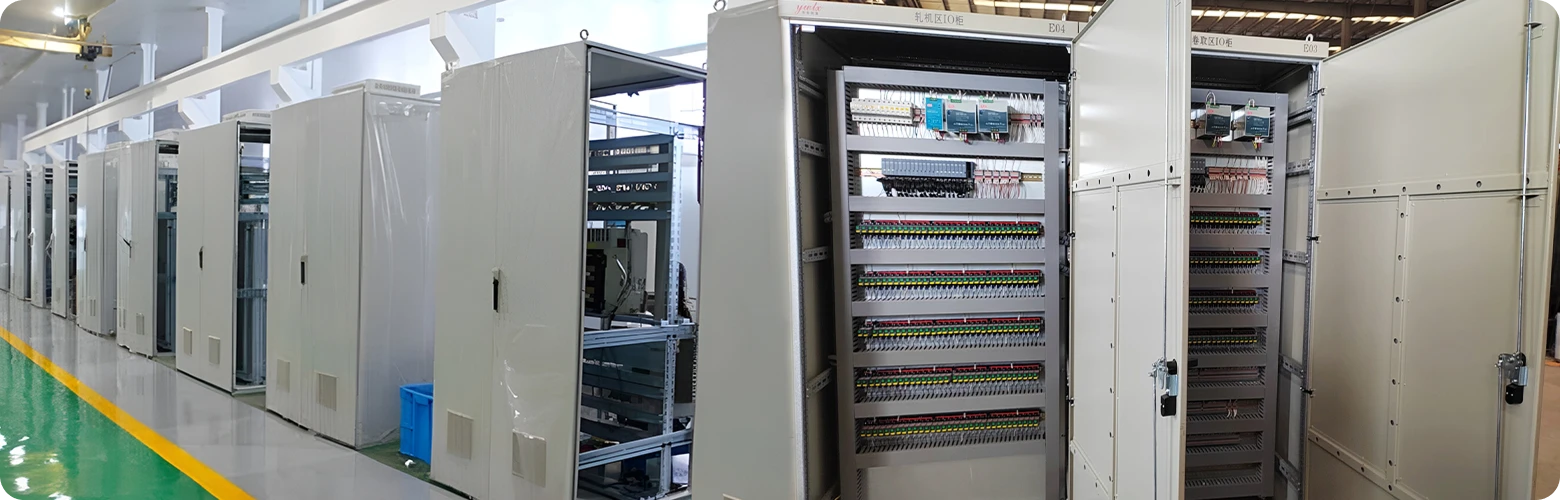
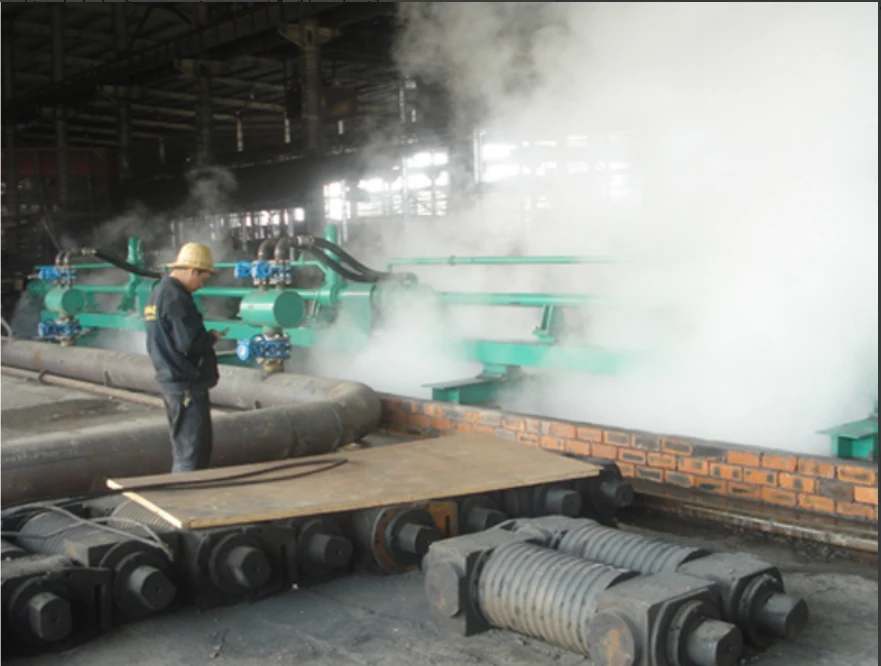

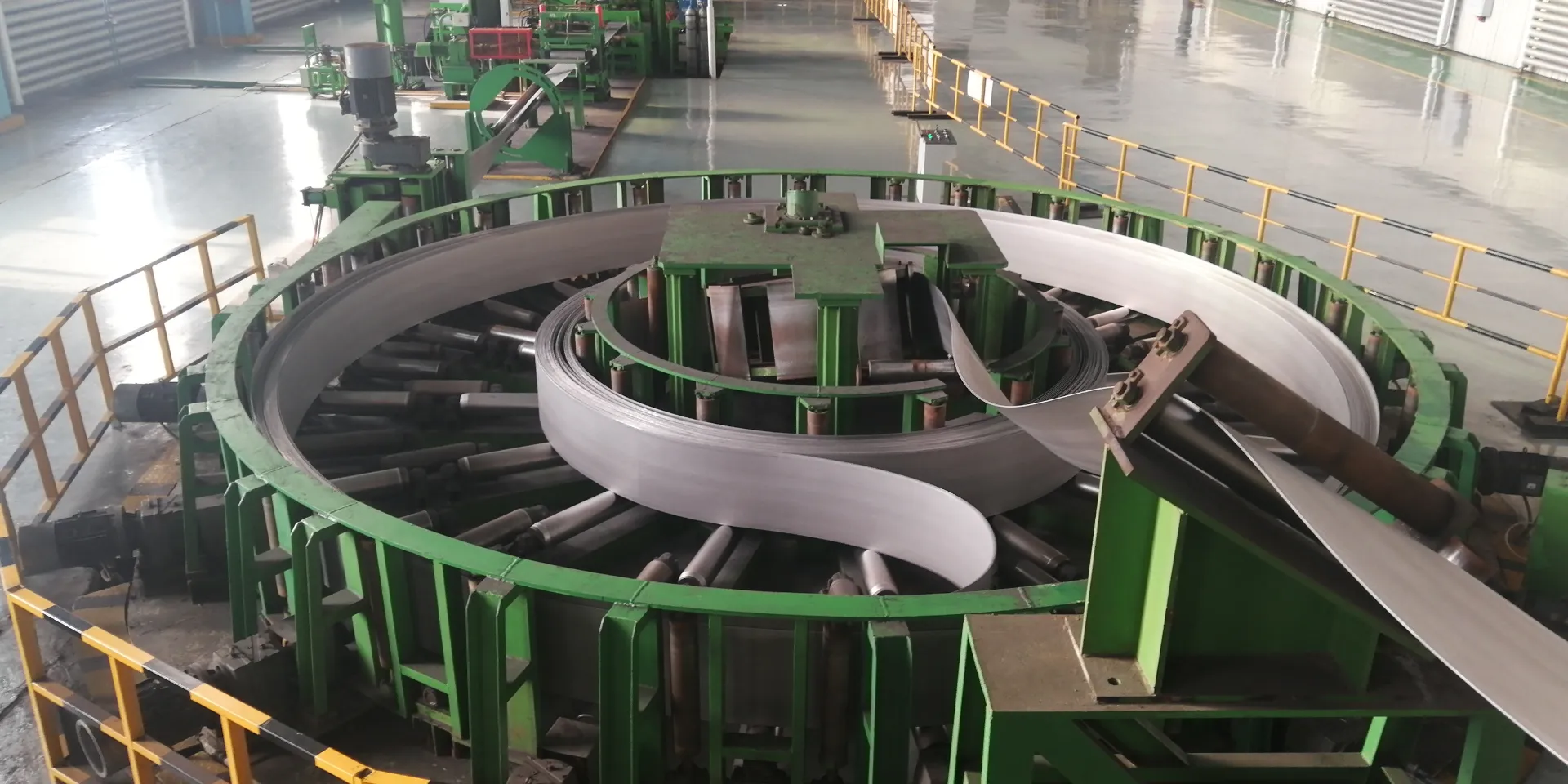
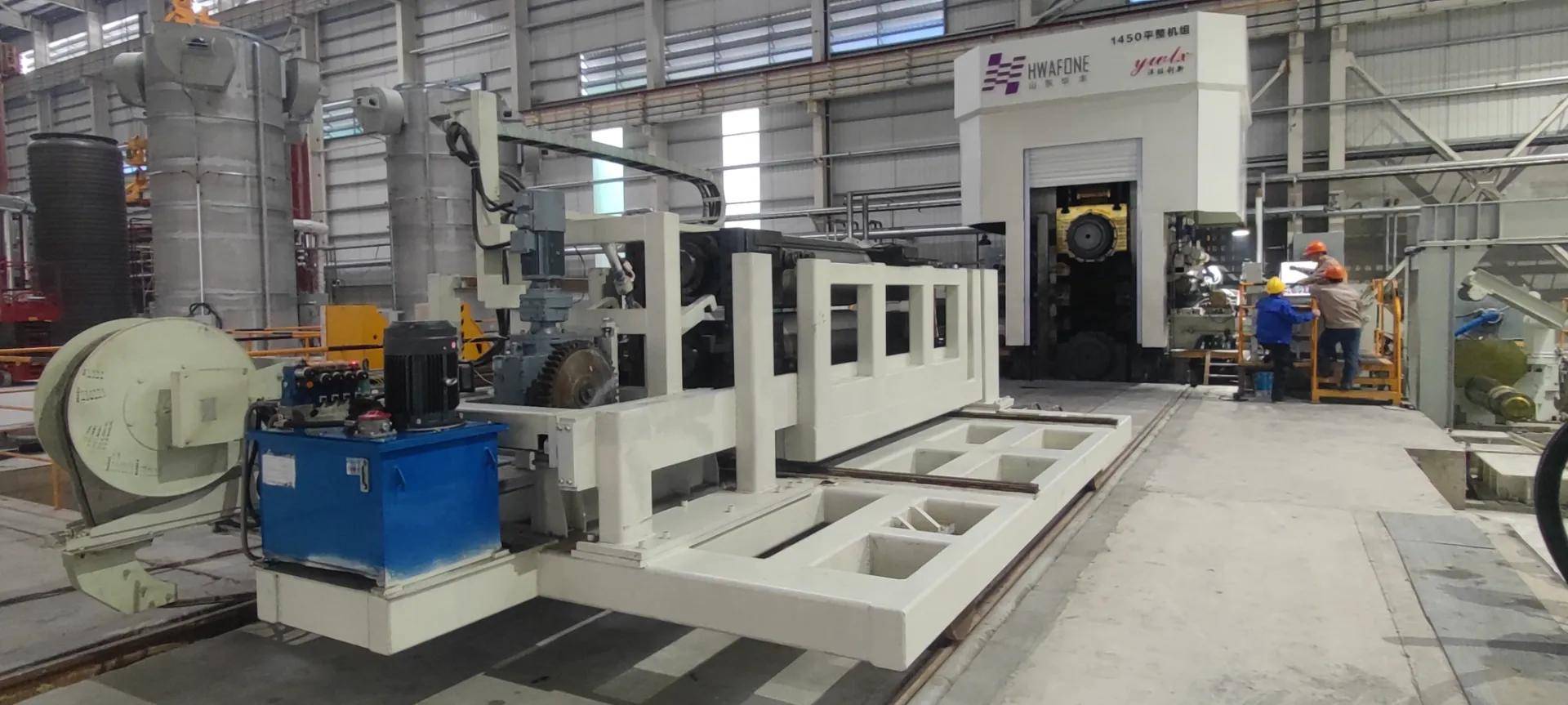
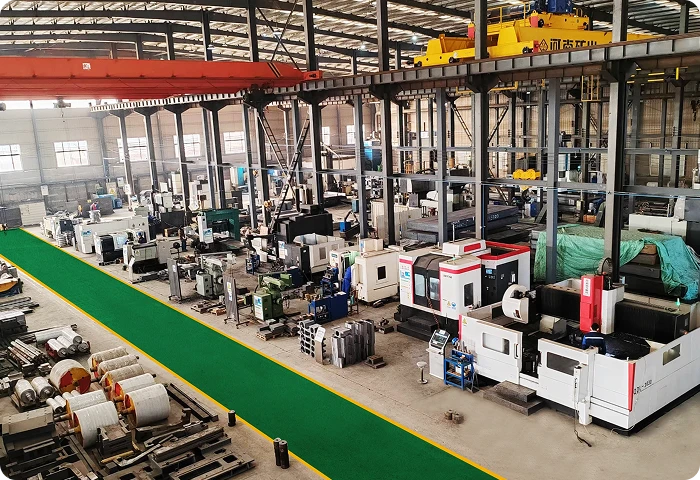
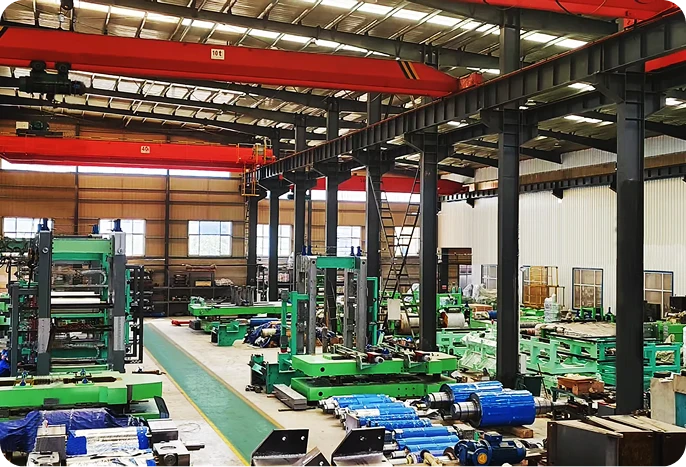
Yang Wang Li Xin operates a state-of-the-art facility over 66,000 square meters,and our manufacturing facility is fully equipped with high-tech machinery and high-capacity cranes. This enables us to handle large work pieces measuring 4.5m in width, 10m in length, and 1.5m in height, guaranteeing our capacity to produce 1800mm skin-pass mills and 1450mm rolling mills. The individual piece can weigh up to 100 tons.


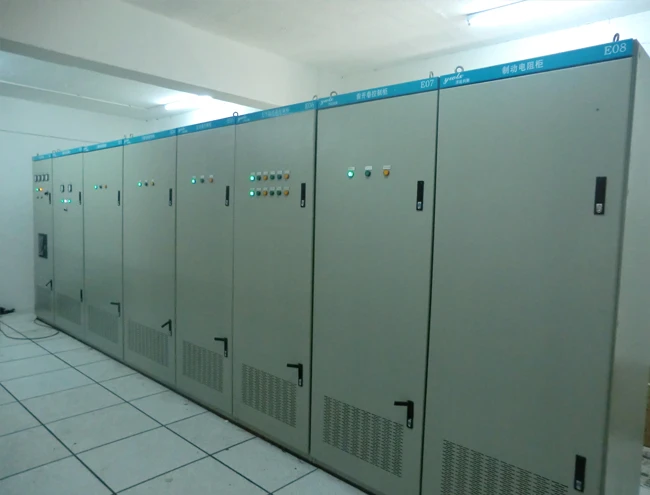
Quality is fundamental to the enterprise survival. We have established a comprehensive and meticulous quality management system and have successfully obtained ISO14000 certification. Starting from the design source, it supervises the entire production cycle, including design, procurement, processing, assembly, in-factory testing, installation, and online commissioning. The workshop is equipped with measuring tools like vernier calipers, spectrometers, hardness testers, and ultrasonic flaw detectors. They are used to check materials and control tolerances to ensure the final equipment meets or exceeds requirements. All products have a unique code, This enables the easy identification and traceability of the equipment components and ensures full control of quality.


-
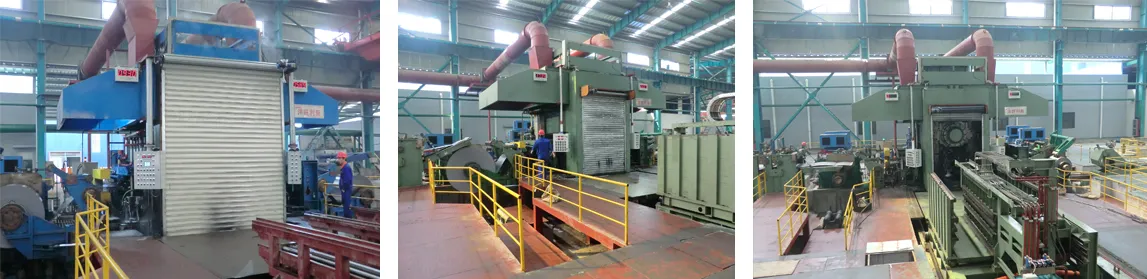 The Critical Role of Hot Strip Mill Manufacturers in Modern IndustryLeading manufacturers continuously push technological boundaries to deliver mills with greater precision, energy efficiency, and production capacity. Their equipment forms the heart of integrated steel plants worldwide, determining the quality, dimensional accuracy, and mechanical properties of countless steel products used in construction, automotive manufacturing, and appliance production. The c
 -
 How Skin Pass Rolling Enhances Sheet Flatness and Appearance ConsistencyThe skin pass mill has become an indispensable component in the production of high-quality flat rolled products, serving as the final arbiter of sheet metal perfection. Unlike primary rolling processes that focus on bulk deformation, the skin pass rolling operation specializes in microstructural refinement and surface enhancement. This precision finishing step bridges the gap between metallurgical
 -
 лазердин платформасыLaserplattierungsverfahren, же лазер түспөлдөө процесси, азыркы замангы материалдарды кайра иштетүүнүн бардык тармактарында, өзгөчө металлургияда жана механизмдерди оңдоп-түзөөгө байланыштуу техникалык чөйрөлөрдө кеңири колдонулат. Бул ыкманы колдонуу аркылуу, ар түрдүү материалдардын бетинде катмары жок же начар болгон жерлерди бекитүүгө, же кайрадан курамын түзүүгө мүмкүнчүлүктөр пайда болот. Ла


